
SEO to GEO: how local businesses can win in the age of AI search

“GEO.” “AIO.” “AEO.” All these new SEO acronyms bring Old MacDonald Had a Farm to mind…
As the way people get information shifts from search engines to answer engines, brands need to ensure their SEO strategies are ready for the age of AI.
Especially if you’re a business who relies on local discovery: restaurants, gyms, salons, health clinics, pubs, hotels, venues, independent retailers, etc.
It’s not something to get intimidated by. It’s something to get excited about!
Hyperlocal is so back
For a wee bit, the internet had something of a “missing middle.” Most of the content you’d see was either:
big viral stuff (everyone sees it, everywhere — monoculture, if you will)…
…or hyper-specific local content (you’d only see it if you searched for it)
But the web is changing again (can’t things stay the same for just, like, five minutes?).
Communities have decentralised. Niche platforms are growing. Location-based discovery is returning, in new forms (TikTok as a travel discovery tool, the gradual re-emphasising of maps inside Instagram, Google Maps becoming an app people spend time in for fun).
Now, search engines are adding fuel to the hyperlocal fire with AI.
As searchers swap queries for questions and results for summaries, the value metric for businesses becomes recommendations, not just rankings.
Before we jump into what that means, let’s just define those acronyms real quick:
AEO (Answer Engine Optimisation): optimising your content so it becomes the best answer, i.e. the thing that gets pulled into featured snippets, voice search responses, and AI Overviews.
AIO (AI Optimisation): a broader umbrella term for making sure your brand shows up correctly across AI-driven discovery channels (including search engines, assistants, chatbots, et al)
GEO (Generative Engine Optimisation): optimising your content and digital footprint so it’s more likely to be referenced by generative AI tools, like ChatGPT or Gemini linking to your site in the citations backing up their summaries
An overview of overviews
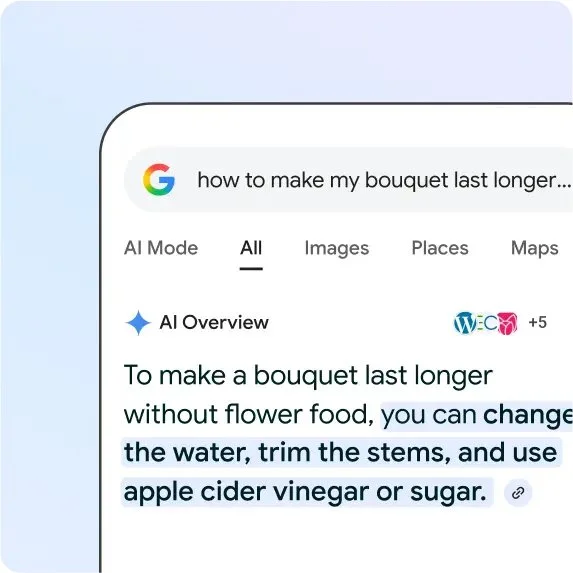
If you’ve noticed a chunky AI-generated summary at the top of Google searches, you’ve come face-to-face with AI Overviews. Instead of sending users to six different websites, Google now basically says: “I’ve read it for you. Here’s the answer (with the occasional mistake sprinkled in for added flavour).”
For publishers, that’s a bit worrying. But for local brands, there mightn’t be need for panic. Many hyperlocal conversions don’t happen via a website click, anyway. They happen through:
Maps
Calls
Booking widgets
Instagram DMs
Group chats
So now the question starts to shift from “are AI Overviews going to reduce traffic?” to “are AI Overviews going to include my business?”
Getting into that AI-generated answer can often be more valuable than getting the #1 ranking in the traditional results below it. Which brings us into…
A new era of zero-click
Zero-click searches basically go like this: someone searches something, gets the answer on Google, and doesn’t click through to anything.
Just as featured snippets did many moons ago, AI Overviews are accelerating the rise of zero-click searches.
But zero-click doesn’t mean zero impact. You can lose clicks and still gain customers.
And if the customer journey has now become less “browse ten websites” and more “choose from the best options,” the whole SEO game is now focused on visibility and clarity.
Naturally, there’s strong correlation between traffic, ranking position, time-on-page, etc. but, your north star isn’t clicks anymore. It’s discoverability.
Back to AEO and GEO for a sec
When we say AEO, we’re talking about providing the best answer. Your content, your listings, your brand footprint, it’s all structured in a way that becomes quotable, not just rankable. It’s not totally dissimilar to formatting copy with the intent of getting it into featured snippets.
Now, GEO, that’s a bit bigger. That’s when you’re optimising for:
AI search experiences, AKA ‘answer engines’
Conversational search
Assistants and AI agents
Summary engines
“Best options near me”-type recommendations
A neat way to think about it is: GEO is word-of-mouth, but your best mate is a robot.
The new battleground: “recommendability”
Considering all that, think about what you search for on a day to day basis (never a bad place to start when planning out new SEO strategies):
“quiet coffee shop to work from near me”
“best brunch spot in this area”
“dog-friendly pub with heaters”
“hotel with good WiFi and late checkout”
“salon that does curly hair properly”
Answer engines and AI Overviews are gonna do their best to summarise some good suggestions for you to read (or hear, if we’re talking voice assistants).
So the brands that win will be the ones whose offerings (the top-level products and services, sure, but also the minutiae of the experience, like dog-friendliness and decent WiFi) are easiest to understand, for both humans and machines.
Like a good date, these AI systems are looking for something that feels relevant, reliable, verifiable, and safe, so they’re gonna look for…
The green flags of GEO
Many of these AEO/AIO/GEO recommendations are the same as what we’ve always known is good for SEO. It’s the end goal that’s different.
‘Traditional’ SEO is about earning a click by ranking in a list of links. GEO is about being understood and trusted, and ticking all the right boxes to appear inside natural-language answers, be it Google AI Overviews, voice assistants, or chatbots.
The boxes to tick include:
1. Specificity
Nobody wants mixed signals (let’s see how long this dating analogy works for).
A personal anecdote, if I may: I was recently in an airport, sat at my gate, glancing around at the advertising copy, as us tortured writers tend to do. In one of the restaurants (I don’t remember what it was called — it was one of those homogeneous names, probably operated by the airport so they can keep more of the money, y’know the kind I mean?), there was a big typographic mural emblazoned on the wall that just said:
“Real, good food.”
What a relief, I thought to myself. Not only is the food good, it’s real, too!
Vague language doesn’t fly anymore (unless it’s in an airport, which makes sense). It never did, really. We all know about keywords. Now keywords are informing more than rankings. They’re information recommendations. It’s a much more human manner of thinking about copy, in many ways.
2. Consistency
Acting different around your friends? Big red flag. (Still going.)
AI runs cross-checks. Google Maps listings, websites, social, directory listings, Reddit threads.
If details clash or drift (opening hours, menu items, address formatting, services) that throws uncertainty in the machine, which can kill recommendations.
3. Clear hyperlocal anchoring
Always let someone know where you are. (Still going.)
Not just your address. Your surroundings. The neighbourhood. Nearby landmarks. The theatre next door.
One of the most common uses for AI answer engines in a hyperlocal context is itinerary-building (“give me a list of places to eat before and after the play I’m seeing here later”), so, if your website offers some of those richer story-driven insights, you’re on the right track.
And it also just makes you so much more memorable, too.
4. Trust signals
The date analogy writes itself here.
Generative search engines love credibility markers. Reviews, mentions on other websites (and backlinks), name-drops across social media, and so on.
Backing up your GEO strategy with a PR campaign and a loyalty scheme which encourages reviews is one of the best things you can do.
5. Intent matching
Everyone loves a good listener.
What are people actually searching for in your area? Again, we ain’t reinventing the wheel here: meeting search demands through keyword research is a tale as old as time.
But there’s a distinction between aiming for rankings and aiming for recommendations.
To use on-page copy as an example, an SEO-minded person might embed a menu strewn with subheadings like “group dinners” and “vegan specials,” but for GEO, you can get more specific and run-on with it:
“Perfect for date nights, small group dinners, and anyone looking for vegetarian options that don’t feel like an afterthought.”
Whenever I’ve discussed search-optimised copy in the past, I’ve always said: remember the human. Don’t just keyword-stuff. It’s boring. It increases bounce rates, which can sink rankings. There’s no personality.
Well, what a wonderful era we find ourselves in now where answer engines are demanding that we remember the human! Our robot overlords must really love us.
ChatGPT, summarise this Trapeze Media articel for me*
The headline from where we’re standing is: search is evolving from lists of links to AI-written answers.
For hyperlocal brands, hospitality businesses (mum‘n’pop and franchises alike), and the dentist around the corner from me, that’s more of an opportunity than a threat.
As AI Overviews accelerate zero-click behaviour, the goal shifts from chasing clicks to being recommended. In 2026, businesses will win by becoming easy for both humans and machines to understand: specific, consistent, locally anchored, trusted, and clearly matched to real-world intent. We all need to find a dog-friendly pub with heaters at some point in our lives.
*No ChatGPT was used in the summarising of this article. I misspelled ‘article’ on purpose. A trace of the imperfection of the human experience. Wouldn’t recommend typos for your SEO strategy though, lol.
The latest insights on the digital landscape, direct to your inbox
Ad industry trends, social media headlines, and digital marketing guides and insights, direct from the Trapeze Media team.
Our emails are sent no more than four times each month. We respect your privacy.

Written by
Kitty NewmanFounder & Director
Kitty is the founder and director of Trapeze Media. An award-winning digital and social media expert, she's worked with some of the UK's largest hospitality and hotel brands, assembling strong teams and leading successful campaigns at a local, national, and international scale. Kitty regularly delivers energetic talks on the digital marketing industry, as well as the people behind it, always championing a healthier, happier approach to agency management. The 'Trapeze' in 'Trapeze Media' stems from Kitty's love for circus performance. If you want to increase your ROI and/or learn how to do a handstand, you've come to the right place.